Hilma Af Klint

Artist Name: Hilma Af Klint
Swedish, 1862 – 1944
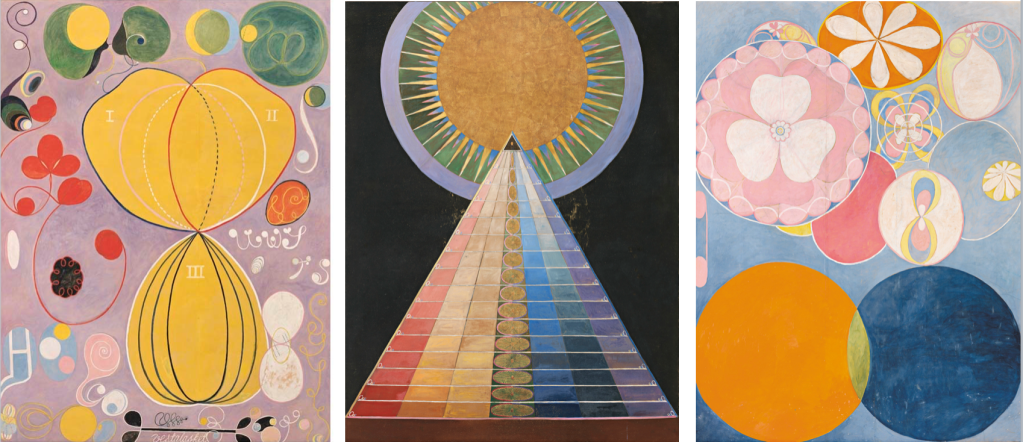
Famous Paintings: The Ten Largest – Nr.7, Nr. 2 & Altarbild

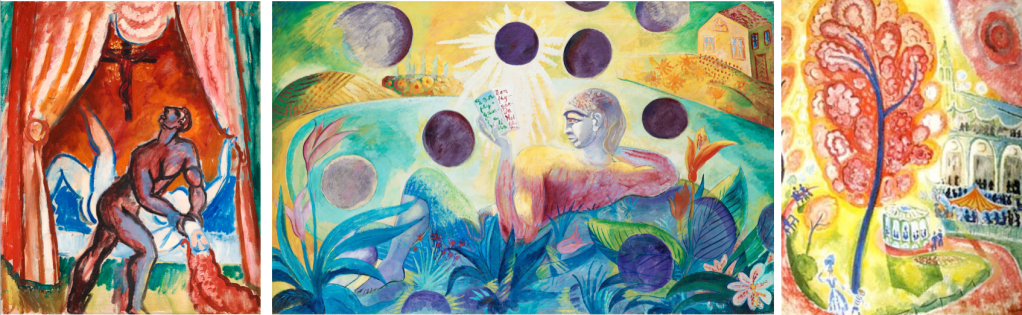
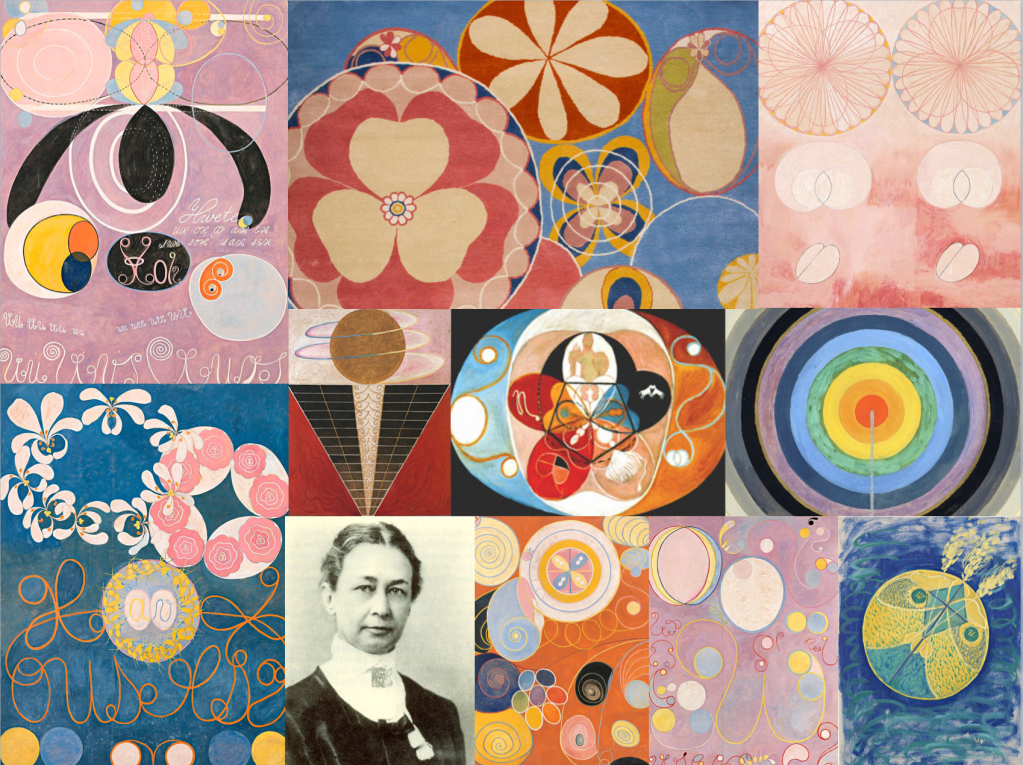
Hilma Af Klint is famous for her bold, abstract and colorful pieces. Nobody had created art like it before her (Guggenheim, 2019).

Art Style: Realism & Modernism 
Inspiration: Spiritualism & Theosophy (Guggenheim, 2019).
Associated with: Her use of different symbols 

Facts: Hilma Af Klint was born in Sweden, 1862. She studied at the Royal Academy of Fine Art, in Stockholm and graduated with honors. She quickly became a respected painter in Stockholm. She was a secretary of the Association of Swedish Women Artists. During this period she became interested in spiritualism and theosophy. In her work, “The Paintings of the Temple” you can see that Af Klint was influenced by spiritualism. She painted boldly, colorful and did not reference to the physical world. Af Klint had barely any exibitions and kept a lot of her pieces private. She did not want her work to be shown for 20 years following her death. As she wanted her work wasn’t seen until 1986, when it received massive attention. Her paintings “The Largest Ten” was exhibited Guggenheim, New York from October, 2018 – April, 2019 (Guggenheim, 2019).

Do I like her art? Yes! I think it’s amazing! I love “The Largest Ten”. I think it was very cool that she was brave enough to incorporate bold and different symbols in her pieces.
Reference: Guggenheim, (2019). Hilma af Klint: Paintings for the Future. Retrieved from https://www.guggenheim.org/exhibition/hilma-af-klint
Josef Frank

Artist Name: Josef Frank
Swedish/Austrian, 1885 – 1967

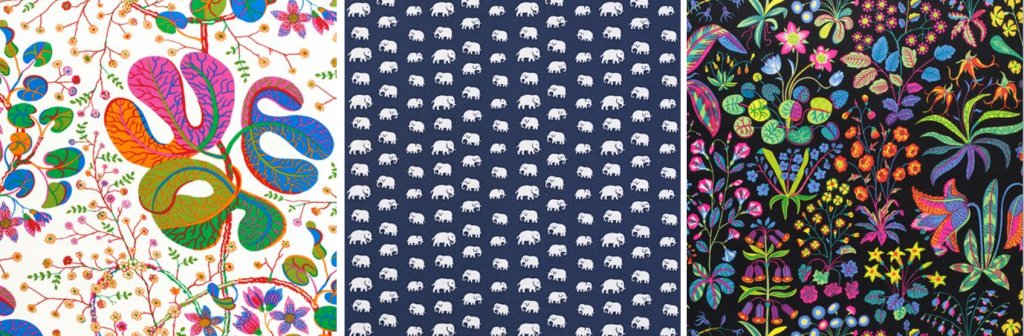
Famous Prints: Teheran, Elephant & Under the Equator

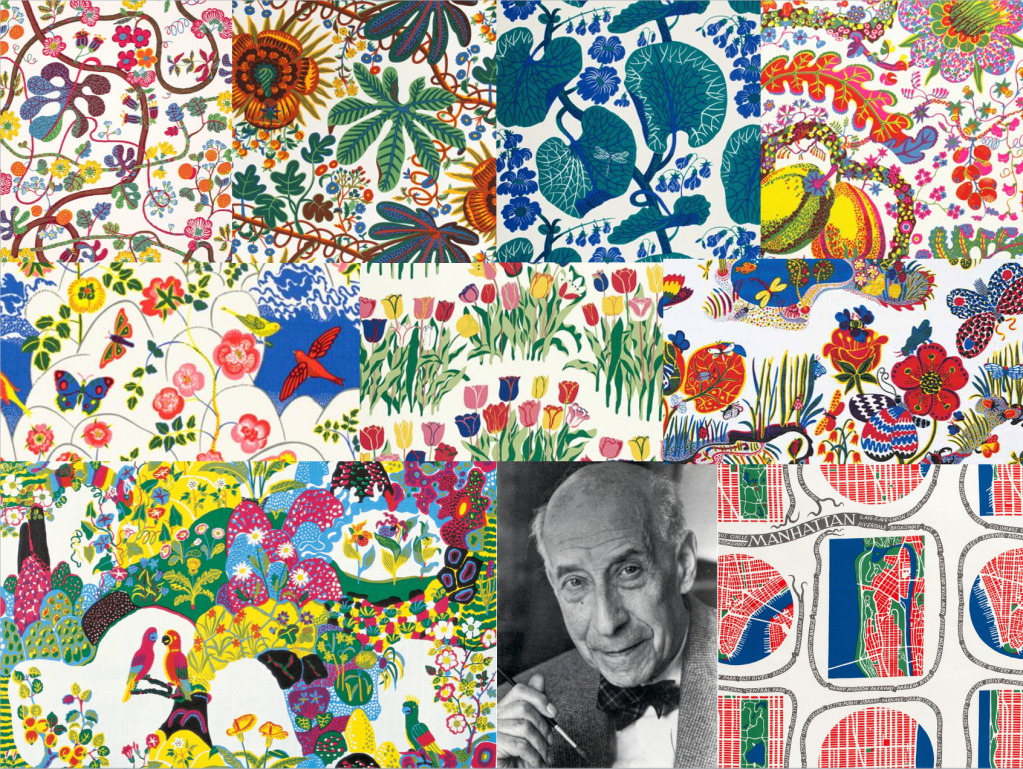
Josef Frank has had an massive impact on the graphic design and print history in Sweden. He is famous for his original prints for the Swedish brand “Svenskt Tenn”.

Art Style: Unclear but modernism
Inspiration: Nature, flowers & colors 
Associated with: Colorful prints

Facts: Josef Frank was born in Austria, 1885. He grew up in a jewish family in Vienna and studied architecture.  In 1925 he started an interior design firm together with architect colleagues. Josef Frank was apart of the early Vienna modernism but started to question it’s ”boringness”. Frank was drawn to a more artistic style ideal and started to develop his version of modernism were colors were in focus. He wanted to include the nature’s forms and colors. In 1934 he moved to Sweden and started working for “Svenskt Tenn” which is a famous interior and textile gallery/store in Sweden. Here he did a huge success and had an international breakthrough. His art was appreciated by it’s brave contrasts, both when it came to his choosing of materials, colors and patterns. It got a lot of attention and it became the model for the term Swedish Modern. During the World War 2 Frank had to escape, so he went to New York. Here he continued producing textile patterns and after a couple of years there he returned to Sweden. He passed away 1967 but Josef Frank is a name most Swedish people knows of due to his famous textile prints (Svensktenn, 2019). 

Do I like his pieces? Yes! I would day most Swedish people does. It has sort of become a part of the Swedish culture. I love his more “tropical” with white background and colorful flowers.

Reference: Svensktenn, (2019). Josef Frank. Retrieved from https://www.svenskttenn.se/sv/om-svenskt-tenn/sedan-1924/josef-frank/

Jesper Waldersten

Artist Name: Jesper Waldersten
Swedish, 1969 – present 

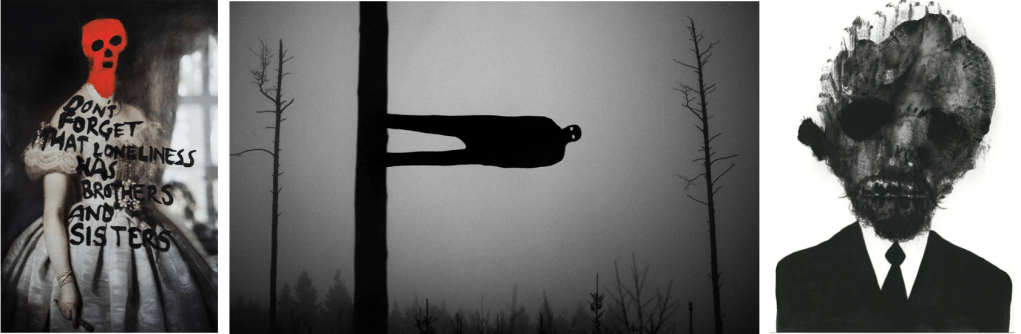
Famous Pieces: Bothers and Sisters, Black Flag & Satisfy

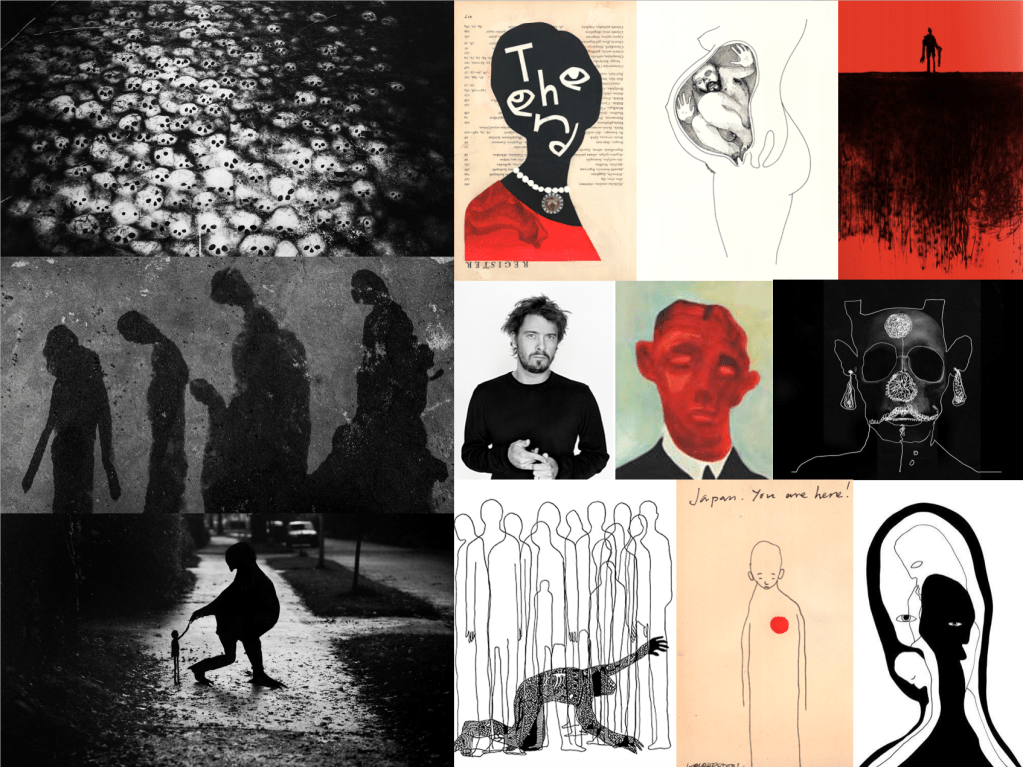
Jesper Waldersten is at the moment one of Sweden’s most popular illustrators. With his original style of mixing words, photos, music and draughtsmanship (Waldersten, 2019). His art can cause discomfort since it can be seen as ”scary”.

Art Style: Unclear
Inspiration: His own studio
Associated with: Dystopia, not using so much color other than red & creating ”scary” art

Facts: Jesper Waldersten was born in Sweden, 1969. He started of by being a illustrator for the daily newspaper in Sweden called ”Dagens Nyheter” (today’s news). Waldersten has tried many different disciplines throughout his life; painting, photography & graphic art. He has worked as an art director and has created music videos. Waldersten has released a book together with a music team, were he created photos, texts, collages and drawings. The 8th of march until the 9th of July he had a exhibition at Fotografiska in Stockholm, which is a famous gallery/museum for photographers (Waldersten, 2019). His art is very different and he is using a technique that he calls ”bypass brainwriting”, were he try not to think about anything, like meditation, and let’s the unconscious go, but it’s important be fast because the ideas disappear quickly (Huldschiner, 2018).

Do I like his art? Yes, I think he has made very creative pieces. I went to his exhibition and it was very inspiring at the same scary. I think he is an extremely creative person, although I am the type of person who prefers more “happy” art.

References: Waldersten, (2019). About the artist. Retrieved from
http://www.waldersten.com/about/
Huldschiner, H. (2018). Interview: Black art with Jesper Waldersten. Retrieved from
https://www.kingmagazine.se/intervju-king-traffar-jesper-waldersten/

Sigrid Hjertén

Artist Name: Sigrid Hjertén
Swedish, 1885 – 1948

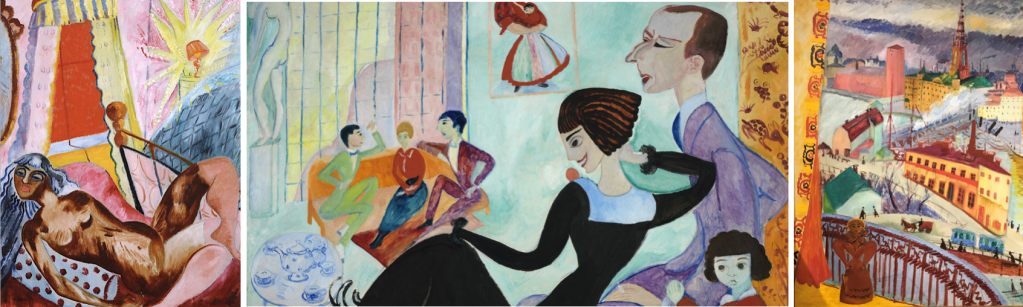
Famous Pieces: The Red Blind, The Studiointerior & View over Slussen

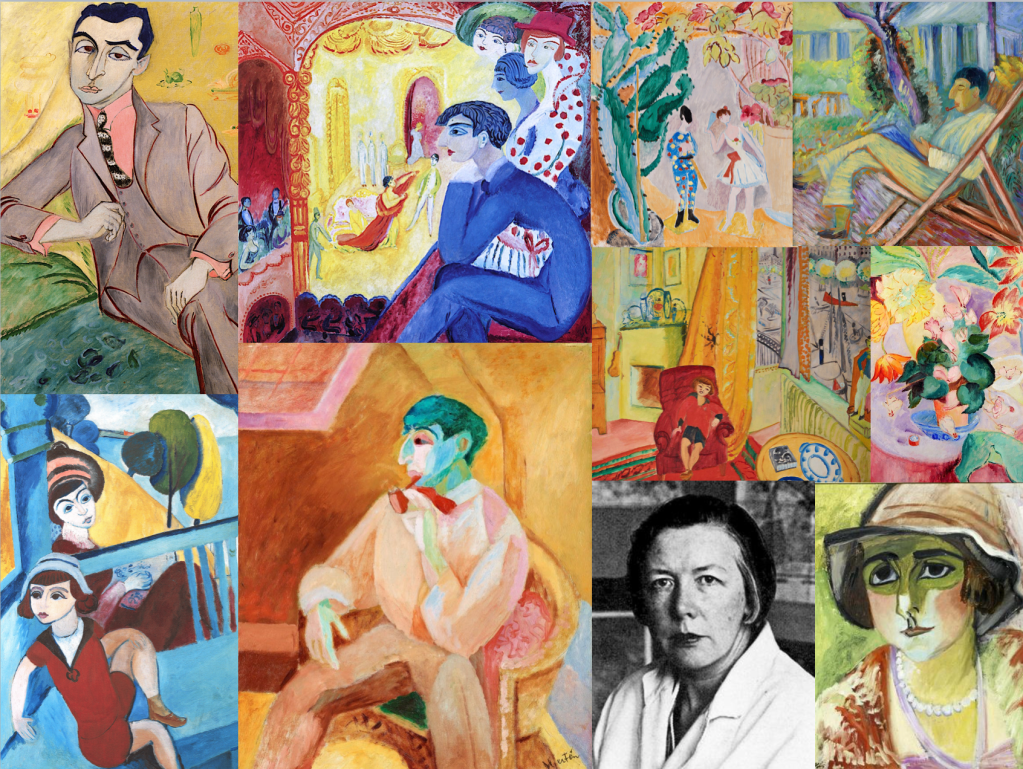
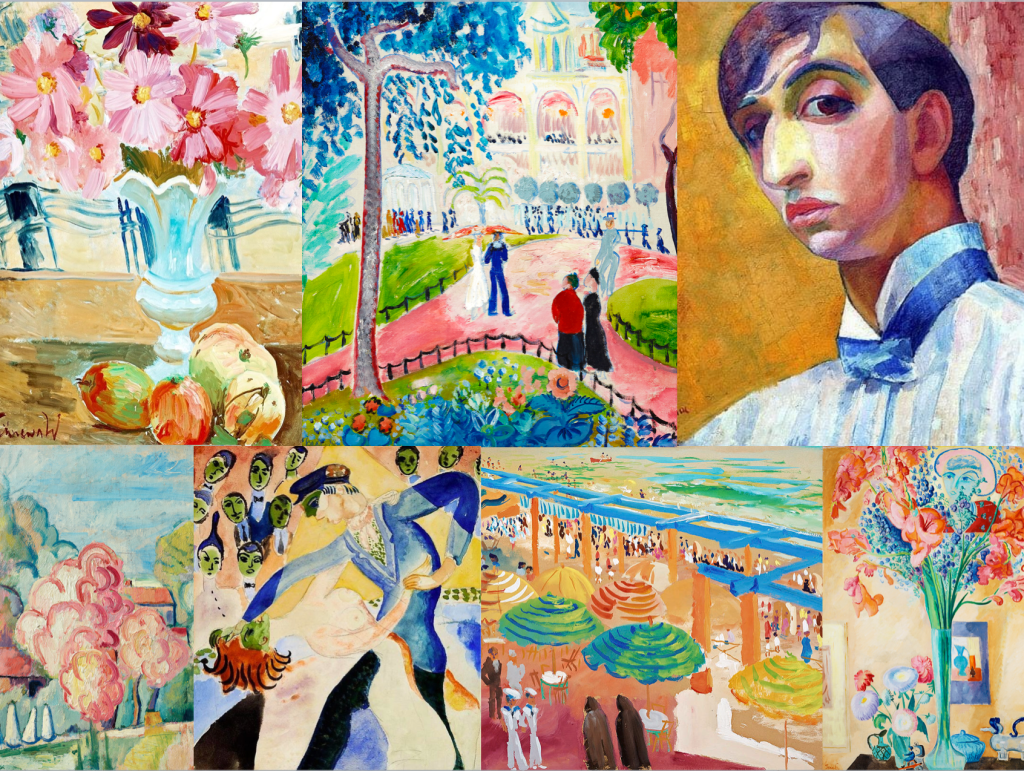
Sigrid Hjertén is a frontfigure of modern art and feminsim. Famous for her expressive color painting.

Art Styles: Modernism & Expressionism
Inspiration: Henri Matisse, Her husband, Isaac Grünewald & Areas around Stockholm (Cavalli-Bjorkman, 2019).
Associated with: Paintings of her husband & colorful paintings (cool-toned colors mixed with warm-toned colors). 

Facts: Sigrid Hjertén was born in Sweden, 1885. She grew up in a wealthy family and studied textile. She then decided to go to Paris and become a student of Henri Matisse. It was here she met her husband, Isaac Grünewald. The couple got married and got a kid named Ivan. After her time in Paris she was an very active artist, which made her well-known both in Paris and in Sweden. She did many exhibitions together with her husband and the other Matisse student. Matisse was her main inspiration throughout her whole career, which you clearly can see in her art work. She used the same color scheme and motives. Hjerén was not only interested in painting but also fashion and design. She experienced some obstacles throughout career since was a female in at that time mans-dominated art world. Being married to Grünewald did not always make it easier since they were ”competitors”. To downgrade her, critics often referred her to ”Miss Grünewald” instead of ”Miss Hjerén”. The family separated in 1932 and then Sigrid Hjertén got mentally sick and was diagnosed with schizophrenia. She then started using even more extreme colors in her paintings. Sigrid Hjertén passed away in 1948 (Cavalli-Bjorkman, 2019). 

Do I like her paintings? YESYESYES!! I would say she is my favorite artist. As I mentioned in previous posts she was the artist that sparked my interest for art. I love her use of colors and for me she symbolizes feminism and standing up for yourself.

References: Cavalli-Bjorkman, G. (2019). Sigrid Maria Hjertén. Retrieved from
https://skbl.se/sv/artikel/SigridHjerten

Isaac Grünewald

Artist Name: Isaac Grunewald
Swedish, 1889 – 1946

Famous Pieces: Othello, The Flying Dutch & The Singing Tree

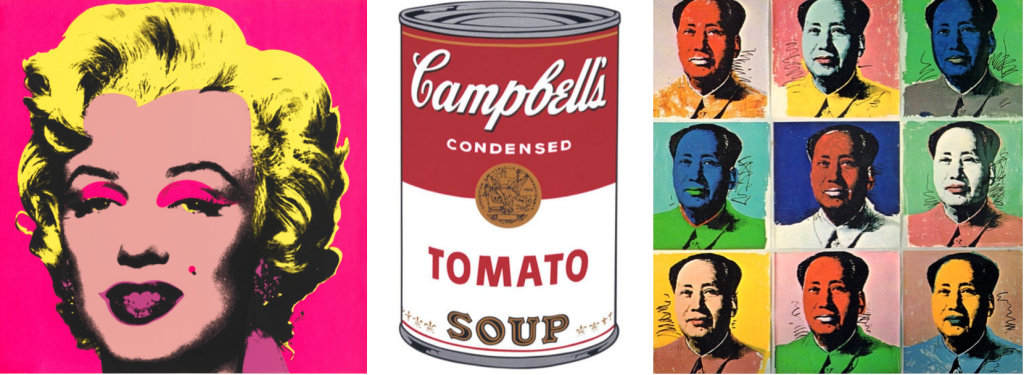
Isaac Grünewald is one of Sweden’s most colorful and famous artists. He had a big role in the modern art movement in Sweden (Albertbonniersforlag, 2015). 

Art style: Expressionism, Fauvism & Modernism 
Inspiration: Henri Matisse, Paul Cézanne & His wife, Sigrid Hjertén
Associated with: Colorful & flowers

Facts: Isaac Grünewald, was born in Sweden, 1889. He grew up in a extremely poor jewish family and had 12 siblings. He discovered his interest for painting at an early age but he had difficulties getting paint equipment. At the age of 13 he created his first oil-painting. He was 19 years old when he went to Paris to become a student of Henri Matisse. It was here he met his wife, Sigrid Hjertén because she was also a student of Matisse. 2 years after his time in Paris he had an exhibition which did not have any success. The viewers had a hard time accepting his use of colors and innovative art. Grünewald lived in Paris between 1920—31, these years were his most successful years. Grünewald experienced success throughout his life but he also went through a lot of struggles; antisemitism, he had a hard time with his wife (Sigrid Hjerten), prison punishment and an early death. Today he is seen as one Swedens greatest artists of the 20th century (Albertbonniersforlag, 2015).

Do I like his art? YES! I love his art! I would love to have a piece in my future home. I love the color scheme he uses and that he paints a lot of flowers etc.

Reference: Albertbonniersforlag, (2015), Isaac Grünewald: modernism and a human. Retrieved from https://www.albertbonniersforlag.se/bocker/197341/isaac-grunewald-modernist-och-manniska/

Andy Warhol

Artist Name: Andy Warhol
British, 1928 – 1987

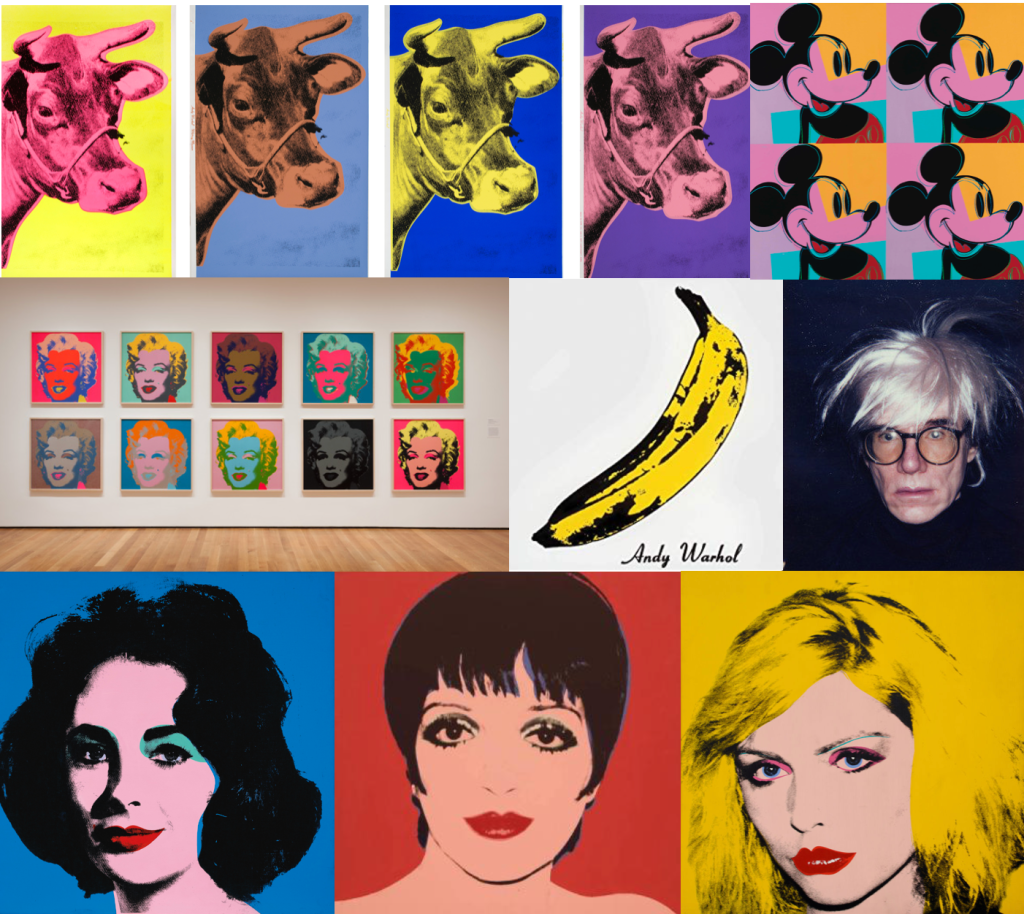
Famous pieces: Portrait of Marlyn Monroe, Tomato Soup & Portrait of Mao

Andy Warhol is the front figure for the popular art movement. He was a successful magazine and ad illustrator (Biography, 2019). 

Art Style: Pop art & Modernism
Inspiration: Commercial goods
Associated with: Creating colorful art out of celebrity portraits 

Facts: Andy Warhol born in America, 1928. His parents were Slovakian immigrants. Warhol got sick at the age of 13, which made him stay in bed for months. It was during this time his mom introduced him to art and gave him a drawing lesson. Warhol quickly got a interested in drawing. When older, Warhol started university to study pictorial design. He graduated with a Bachelor of Fine arts and decided to move to New York to start a career as a commercial artist. He started working at Glamour magazine, where he extremely successful and won awards for his original style. Warhol became a celebrity and was seen on clubs like Studio 54. In 1968, a radical feminist tried to take Warhols life by shooting him. He survived and had too spend weeks at the hospital recovering. Warhol tried a variety of art forms, such as performance art, creating films and writing. Some of his most famous pop paintings portrayed coca-cola bottles, celebrity portrays, tomato soup containers and hamburgers. In 1987 Warhol passed away from chronic issues with his gall bladder. His work got a lot of positive feedback throughout his lifetime but also got critiqued for being too ”materialistic” (Biography, 2019). 

Do I like his art? Yes. I love that most of it is very colorful. It’s perhaps not my favorite type of art style though.

Reference: Biography, (2019), Andy Warhol Biography. Retrieved from
https://www.biography.com/artist/andy-warhol

Pablo Picasso

Artist Name: Pablo Picasso
Spanish, 1881 – 1973

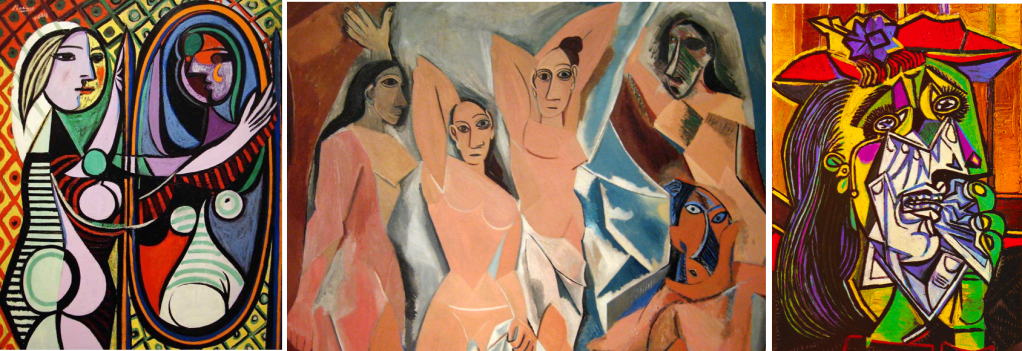
Famous Paintings: Girl Before A Mirror, The Weeping Woman & Les Demoiselles d’Avignon

Pablo Picasso is probably the most important figure of 20th century, when it comes to art. Nobody, prior to Picasso, has had the same impact  on the art world like him (Pablopicasso, 2019).

Art Style: Cubism, Symbolism, Modernism & Surrealism
Inspiration: Paul Cézanne, Henri Rousseau, etc (Pablopicasso, 2019).
Associated with: “Oddly” shaped faces & his use of geometric shapes and collages

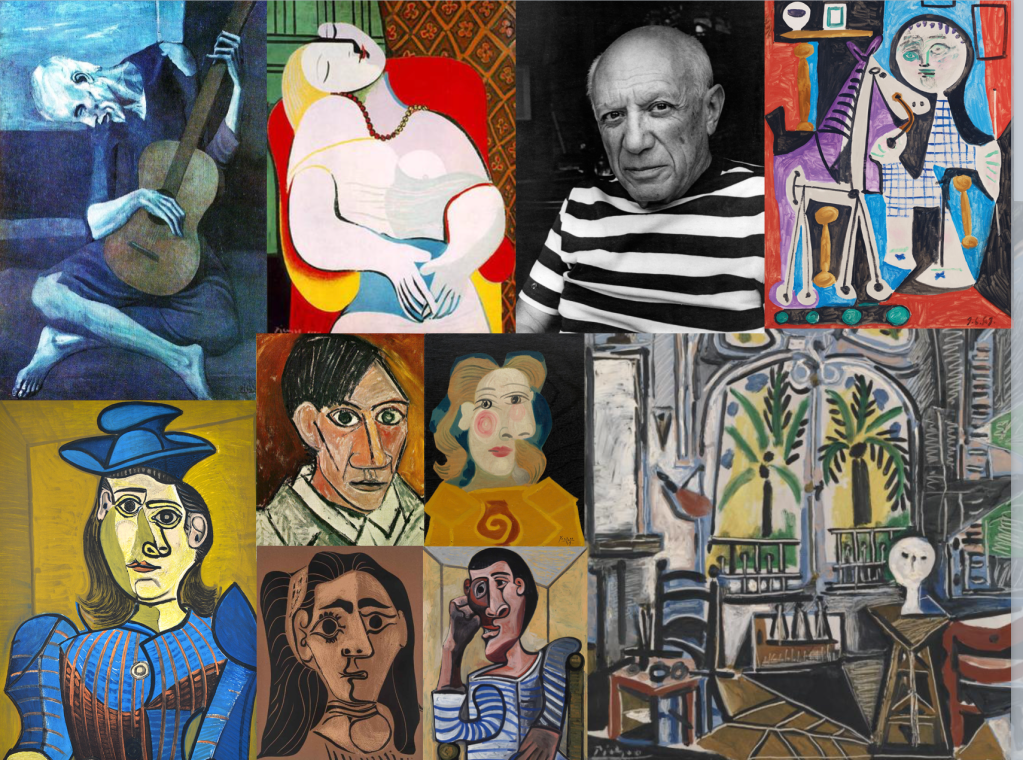
Facts: Picasso was born in Spain, 1881. Picassos father was a painter himself and a professor of art. He was impressed of Picasso’s paintings from the beginning and was a huge support throughout Picasso’s whole childhood. Picasso was extremely talented already at an early age. Combining his technique for realism and learning more about symbolic influences, led to Picasso’s own take on modernism. He then moved to France and where he spent his adult life life working as an artist. Picasso tried many different types of art styles throughout his life. His art has been divided into periods of time where he created complex themes, for examples the blue period (1901-1904), & Cubism (1909-1919) etc. Picasso, together with Georges Braque was the founder of the Cubist movement. This movement forever changed European painting and sculpture. In cubism objects are broken up into pieces and re-arranged in an abstract form. The art he created his last years were a mix of many styles he had tried throughout his life. He started being even more ”brave”, creating bigger sculpture and more colorful paintings (Pablopicasso, 2019).

Do I like his art? Yes! I think he was an amazing artist. The fact that he could create so many different types of art is incredible. I also like his use of colors in some of the paintings, such as “Girl Before A Mirror”. I actually went to The Picasso museum in Barcelona, which is located in the building that used to be his home for a while.

Reference: Pablopicasso, (2019), Pablo Picasso and his paintings. Retrieved from https://www.pablopicasso.org

Vincent Van Gogh

Artist Name: Vincent Van Gogh 
Dutch, 1853 – 1890 

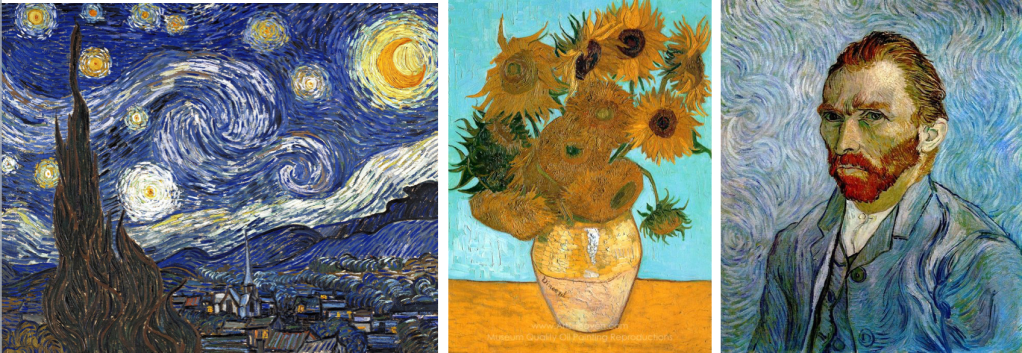
Famous Paintings: The Starry Night, Sunflower & Self-portrait With Swirling Background

Vincent van Gogh is one of the famous post-impressionists painter. He is one of the most influential artists and had an huge impact on modern art (Vangoghgallery, 2019). 

Art style: Post-impressionist, Modernism & Expressionism
Inspiration: Camille Pissarro, Claude Monet, Paul Gauguin (Vangoghgallery, 2019)
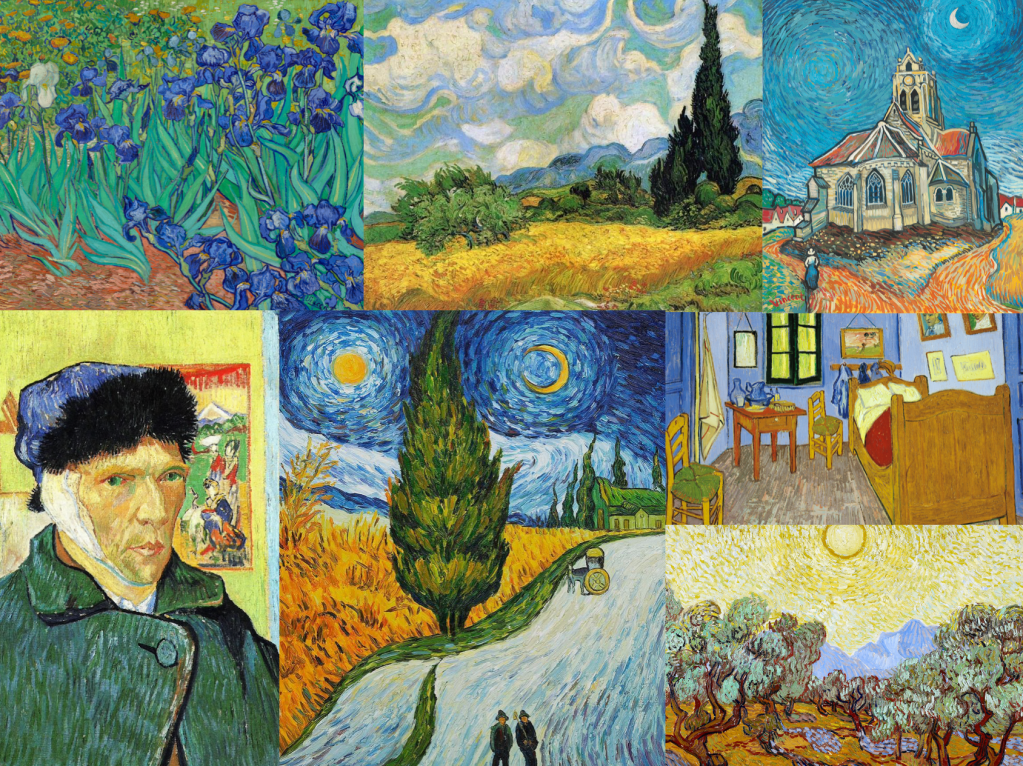
Associated with: Short brush strokes & his use of color

Facts: Vincent Van Gogh was born in The Netherlands, 1853. He was raised in a religious way and suffered with low self-esteem. Between 1860 and 1880, van Gogh decided to become an artist. By that time he had already been through some obstacles such as unhappy romance and bad jobs. He then started studying art and decided be happy by creating beauty. Van Gogh went to Paris to continue studying art and met famous artists such as Monet. He tried to use their techniques; lighten up his dark palette and use short brush strokes of the Impressionists style. He did not succeed so he developed his own more bold and original style. After this he got into a period of mental illness. He actually got into a fight with his friend with a razor blade and ended up cutting of a portion of his own ear lobe off. Van Gogh was sent to the mental institution for treatment. After a couple years he got out and seemed to be in a much better mindset. Two months later he killed himself. During his lifetime he did not experience any success and sold only one painting. It wasn’t until years after his death his art became so famous (Vangoghgallery, 2019). 

Do I like his art? Yes. I think van Gogh was extremely talented, I loved the way he used short brush strokes. I am a type of person who prefers a little more warmed-tone colors though.

Reference: Vangoghgallery, (2019), Vincent Van Gogh Biography. Retrieved from https://www.vangoghgallery.com/misc/biography.html

Henri Matisse

Artist Name: Henri Matisse
French, 1869 – 1954

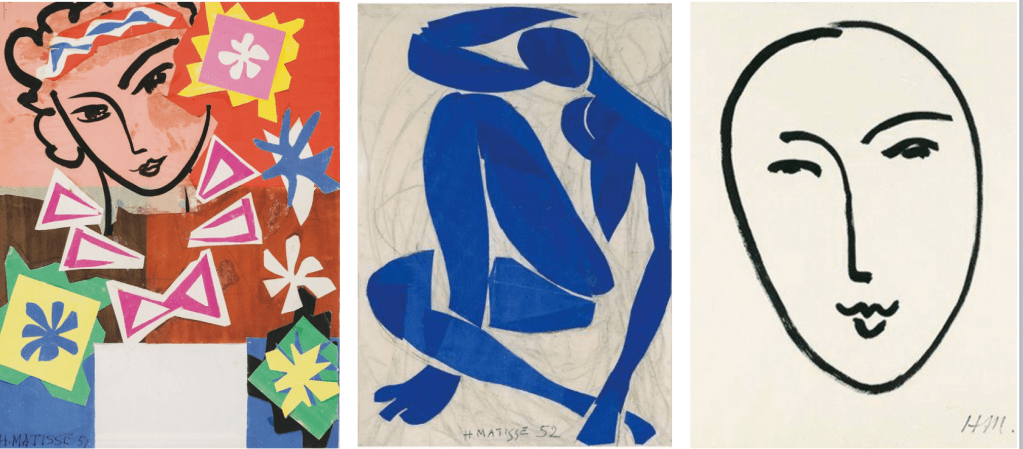
Famous Paintings: Madame de Pompadour, Nu Blue & Large Face

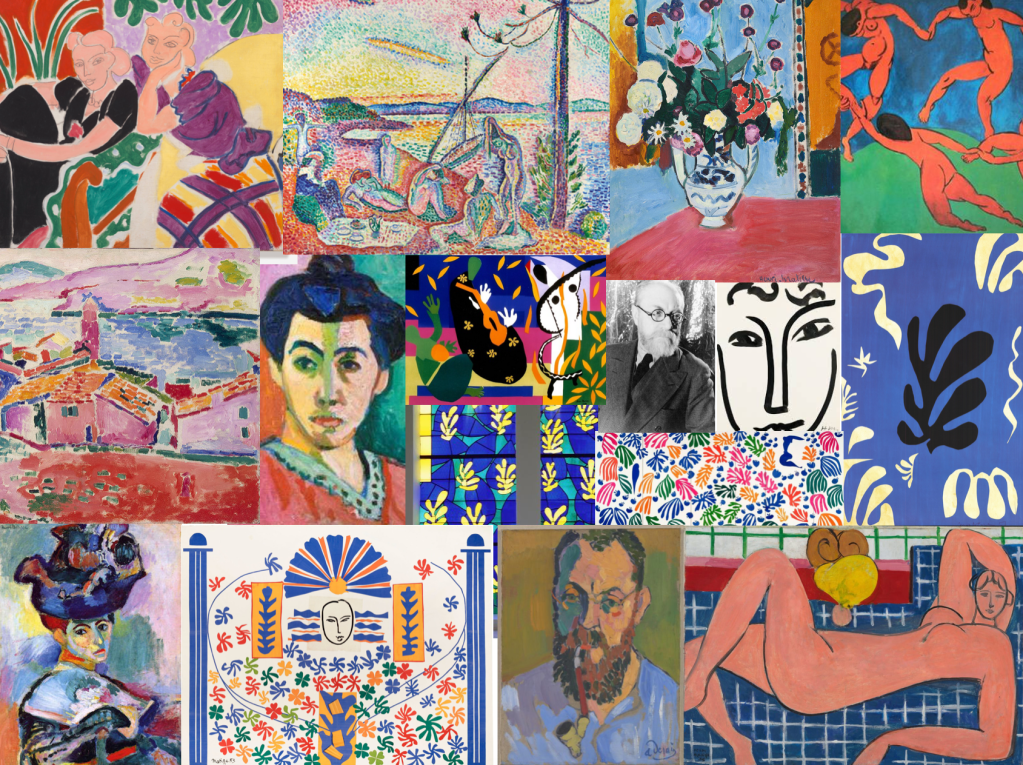
Henri Matisse is famous for his use of colors and a front figure for modern art. Matisse, together with Marcel Duchamp & Picasso was responsible for the revolutionary development in painting and sculpture at their time. He is mostly known as a painter but was also a printmaker, sculptor, glass-maker & a drafter (Henrimatisse, 2019).

Art styles: Fauvism & Modernism
Inspiration: Jean-Baptiste-Siméon Chardin, Edouard Manet & Paul Cezanne (Henrimatisse, 2019)
Associated with: Bright colors, paper cut outs & “one line” faces

Facts: Henri Matisse was born in France, 1869. His parents owned a flower business. Matisse originally studied law in Paris but then in 1889 he discovered his love for painting, when his mother got him art supplies. Then he went to Paris to study art and this made his father disappointed. Matisse first started painting landscapes in a very traditional style. He started using brighter colors after he spent the summer of 1904 in St.Tropez. The same year Matisse met Pablo Picasso. They became life-long friends and competitors. The two of them are often compared. The difference is that Matisse often painted from nature, while Picasso painted more from his imagination. They both painted women and still life most of the time, though Matisse liked to place his figure in fully realized interior. In 1905, Matisse and a group of artists known as ”Fauves” did a exhibition together. They all used ”wild” colors and Matisse was seen as the leader of the Fauves. Matisse was always engaged in collaborations with other artists. In 1941 he started using a wheelchair and creating cut paper collages. Matisse died of a heart attack at the age of 84 (Henrimatisse, 2019). 

Do I like his art? YES! I am a huge fan of Henri Matisse! He is one of my all time favorites. I love that he uses so much color and that brave enough to go against the “norms” of art at the time. Me and my family went to The Matisse Museum in Nice, in France, where I got to see Nu Blue. The museum was in his old house and the building was magical.

References: Henrimatisse, (2019), Henri Matisse Biography. Retrieved from https://www.henrimatisse.org

Salvador Dali

Artist Name: Salvador Dali 
Spanish, 1904 – 1989 

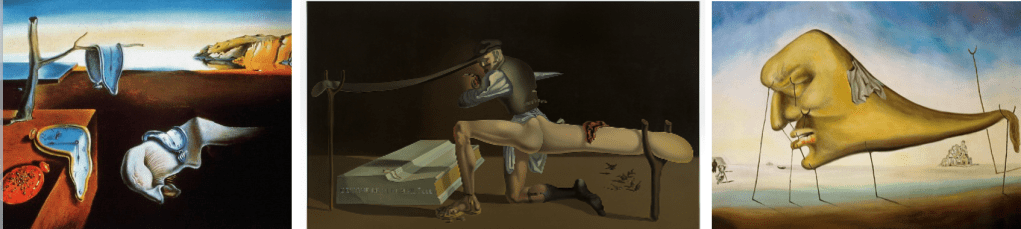
Famous Paintings: The Persistence of Memory, The Enigma Of William Tell & Sen

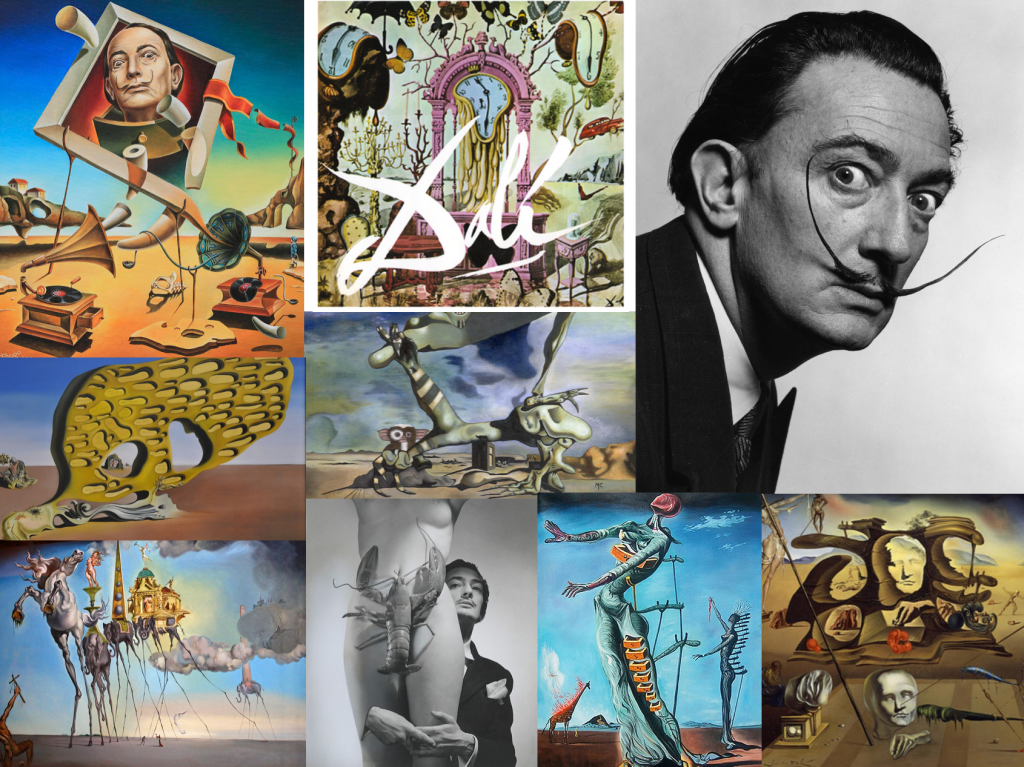
He could be seen as a front figure for surrealism and he is famous for creating art that represent his version of the ”dreamworld”.

Art styles: Mainly Surrealism but also Impressionism, Futurism, Dadaism, Modernism & Cubism
Inspirations: Pablo Picasso, René Magritte, Sigmund Freud, etc.
Associated with: 1) man’s world, 2) sexual symbolism and 3) ideographic imagery (Biography, 2019).

Facts: Salvador Dali was born in Spain, 1904. He started painting when he was very young. He had a hard time at school, which made him even expelled. He adopted the recognizable mustache at an early age. Dali had his first Surrealistic period in 1929, where he created oil paintings with small collages of his dream images. Dali was a big fan of Sigmund Freud and his theories, which he included a lot of in his art work. He created art he accessed from his dreams and subconscious. A lot of the details in his art are symbols that represents Freud theory. As the war came, Dali got kicked out of the Surrealistic movement because he refused to take a stance against Spanish militant Francisco Franco. In 1948, after the World War 2 Dali and his wife moved back to his hometown in Spain were his focus moved away from Surrealism and into his classical period. In his final years he had to stop painting because he got a disorder that caused weakness in his hands. During this period, Dali’s wife passed away. These two factors caused him to get into a depression. Dalí passed away due to heart failure when he was 84. (Biography, 2019).

Do I personally like his art? Yes and no. I think they are all very fascinating to look at. It’s perhaps nothing I would have liked to be hanging in my bedroom though because I think some of the pieces are quite scary. 

Reference: Biography, (2019), “Salvador Dalí Biography”. Retrived from https://www.biography.com/artist/salvador-dali

Design a site like this with WordPress.com
Get started